
Blog
Leather Jacket Peeling? Here’s What It Really Means (and what you can fix)

Leather jacket peeling is one of those problems that looks small and feels huge. One flake near the cuff, and suddenly you are wondering whether the jacket is ruined, whether it was ever real, and whether anything can be done. The answer depends on what you are looking at, because peeling, cracking, and flaking are three different problems with three different outcomes.
This guide helps you work out which one you have, what it says about the material, and which fixes are worth your time. Along the way, we will point out what no amount of conditioner can repair, so you do not waste a weekend on it.

Peeling, Cracking, or Flaking: Which One Do You Have?

Look closely at the damaged spot in good light, then match what you see to this table.
| Symptom | What It Looks Like | Most Likely Cause | Fixable? |
|---|---|---|---|
| Peeling | A thin skin lifts away, often with a fabric backing underneath | Coating separating from a synthetic or bonded base | No, only covered up |
| Flaking | Small dry bits of surface fall off like dust | Aging coating or finish breaking down | Rarely |
| Cracking | Fine lines or splits that follow creases at the elbows, cuffs, and collar | Dry leather that has lost its flexibility | Early cracks can be softened, deep splits stay |
| Finish wear | Color rubs off at edges and seams, with fibrous leather beneath | Worn surface finish on real leather | Partly, with recoloring and conditioning |
| Sticky surface | A tacky feel, sometimes with a shiny film | Coating breaking down, or product residue | Depends on the cause |
Why Real Leather Rarely Peels
Leather with a natural surface, such as full-grain, is the outer layer of the hide with its fibers intact. There is no separate plastic film on top to lift away, so it does not delaminate the way coated materials do. It ages through creasing and softening instead, which is how pieces like the black calf leather shirt jacket tend to wear.
When real leather ages badly, it usually dries out and cracks, or its surface finish wears thin. That is the one exception worth knowing: real leather can carry a finish layer, and a poor finish can flake or rub off even when the hide underneath is genuine.
Bonded Leather Peeling and Other Coated Materials
Most true peeling points to a coated material. That means polyurethane (PU) laid over fabric, or bonded leather, which is leather scraps pressed together and covered with a coating. Both can look convincing when new, and both lose their surface once the coating breaks down.
A special case: real leather with a heavy coating
Peeling does not always mean the jacket contains no leather at all. Some jackets are made from split leather, the lower layer of the hide, with a thick polyurethane coating added to create a leather-like grain. These can peel too, and what you see underneath is real, fibrous leather. A label such as “genuine leather” tells you the material is real, but not how thick the coating is or how well the jacket will age. The real question is whether the surface is a natural hide or a coating that has failed.
How to check without damaging the jacket
- Look under the damaged patch. A woven or paper-like backing points to a coated synthetic or bonded material. Fibrous leather under a lifted film points to real leather with a coating.
- Check a hidden edge or seam allowance. Natural leather looks fibrous and uneven, while coated material looks layered and uniform.
- Read the label and product description, and ask the seller what the leather type and finish are. A clear answer is a good sign.
- Press and release the surface. Natural leather tends to wrinkle unevenly, while plastic coatings crease in repeated, even lines. Treat this as a rough hint, not proof.
For a reference point, look at the natural grain on the women’s black Italian goat leather biker jacket. For more on telling real leather from the imitation kind, see our guide on how to choose a genuine Italian leather jacket. We do not recommend the flame test you may have seen online. It is a fire risk and it leaves a permanent mark on the jacket.
Peeling Leather Jacket Fix: What Works at Home
Home fixes work only on real leather that is dry or lightly worn, never on a failing coating.
- Wipe the jacket with a soft cloth lightly dampened with water, then let it air dry away from heat.
- Test a leather conditioner on a hidden spot, such as inside the hem, and wait for it to dry.
- Apply a thin layer with a clean cloth, work it in with gentle circles, and let it absorb.
- Repeat only if needed, because too much conditioner leaves leather greasy and attracts dirt.
Early cracks often soften and look less obvious after conditioning. Deep splits will not close, but conditioning can help keep them from spreading. If color has rubbed off at edges and seams on real leather, a leather recoloring product matched to your shade can help, though a specialist will get a closer match.
One caution: suede, nubuck, aniline, and waxed leathers can darken or stain with standard conditioners, so check the care label and use a product made for that leather type. The same routine suits other smooth leather pieces such as men’s leather bags and women’s leather skirts, as long as they are not suede or nubuck.
What You Cannot Fix
A peeling coating cannot be glued back or conditioned back. Repair dye and fillers can cover the damage for a while, but the peeling usually continues because the layer underneath has already failed. If a repair kit is your plan, treat it as a cosmetic patch, not a cure.
Deep cracks that go all the way through the leather and large areas of lost color also belong in this group. A specialist can improve how they look, but the original surface will not return. If the jacket is new, check the seller’s return or warranty window before you try any fix, because a repair attempt can affect your options.
Mistakes That Make It Worse
- Drying the jacket with a hair dryer, heater, or sunny windowsill. Heat dries leather and speeds up cracking.
- Rubbing in household oils. They can darken leather unevenly and leave residue.
- Putting leather conditioner on a coated or faux jacket. It does not repair the coating and can leave it sticky.
- Pulling off loose flakes by hand, which tends to lift more coating around them.
- Soaking the jacket, which strips natural oils.
When to Take It to a Professional
Bring in a leather specialist when the jacket is a piece you want to keep, when cracking sits across high wear areas like the collar and elbows, or when color has worn away in large patches. Ask whether they work with your type of leather and whether they can show you similar work. A good specialist will also tell you plainly if the jacket is not worth repairing.
How to Avoid Leather Jacket Peeling Next Time
The best fix is choosing leather that has no thick coating to lose. Read the product description for the type of leather and the grain, and ask the brand what sits under the finish. A seller who is proud of the material will tell you.
Once you own one, a simple routine goes a long way. Store it on a wide hanger in a breathable garment bag, away from radiators and direct sun. If it gets wet, let it dry naturally. Condition it lightly once or twice a year, as we explain in our guide on how to care for a leather jacket.
Why is my leather jacket peeling?
Usually because the coating on the surface has separated from what is underneath. That happens most often with PU-coated fabrics, bonded leather, and real leather with a heavy coating, as the coating ages and flexes. Leather with a natural surface rarely peels. It more often dries out and cracks.
Is a peeling leather jacket worth repairing?
It depends on the material. If the coating is lifting from a synthetic or bonded base, repairs are usually cosmetic and short-lived. If real leather is cracking and the jacket is well made, a specialist repair can be worth the cost.
Can leather conditioner stop peeling?
No. Conditioner helps dry real leather stay flexible, but it cannot reattach a coating that has separated. On coated materials, it can make the surface sticky.
Can you fix a peeling faux or bonded leather jacket?
Not properly. Once the coating has separated, it cannot be reattached. Repair dyes and fillers can hide the damage for a while, but the peeling usually carries on, so treat any repair as a cosmetic patch and consider replacing the jacket.
Why does my leather jacket feel sticky?
A tacky surface often means an aging coating is breaking down. It can also come from product residue or storage in a humid spot. Wipe it lightly and let it dry. If it stays tacky, the coating is the likely culprit.
Can heat or sun cause leather to crack?
Yes. Radiators, hot cars, and long stretches in direct sun pull moisture out of leather and make it stiff. Keep the jacket in a shaded, ventilated spot.
Does cold weather crack a leather jacket?
Cold makes leather stiffer, so flexing it hard right out of a freezing car or porch can stress the surface. Let the jacket warm to room temperature before you wear it.
How long should a real leather jacket last?
A well-made leather jacket can last many years with basic care. How long depends on the type of leather, the finish, how often you wear it, and how it is stored.
Ready for a Jacket Built to Age?
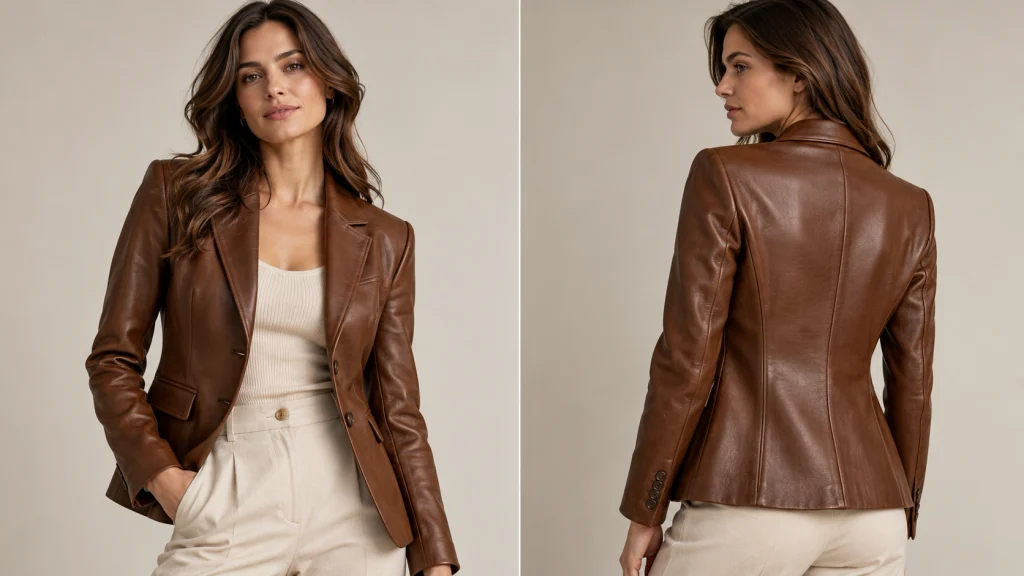
If your current jacket has reached the end of the road, start the next one on solid ground. Browse our men’s leather jackets and women’s leather jackets collections, or look at pieces such as the women’s black Italian leather jacket with pockets and the brown Italian goat leather blazer jacket for a warmer tone. Choose one that ages with wear instead of delaminating.